
How Dog Grooming Vacuums Reduce Shedding at Home
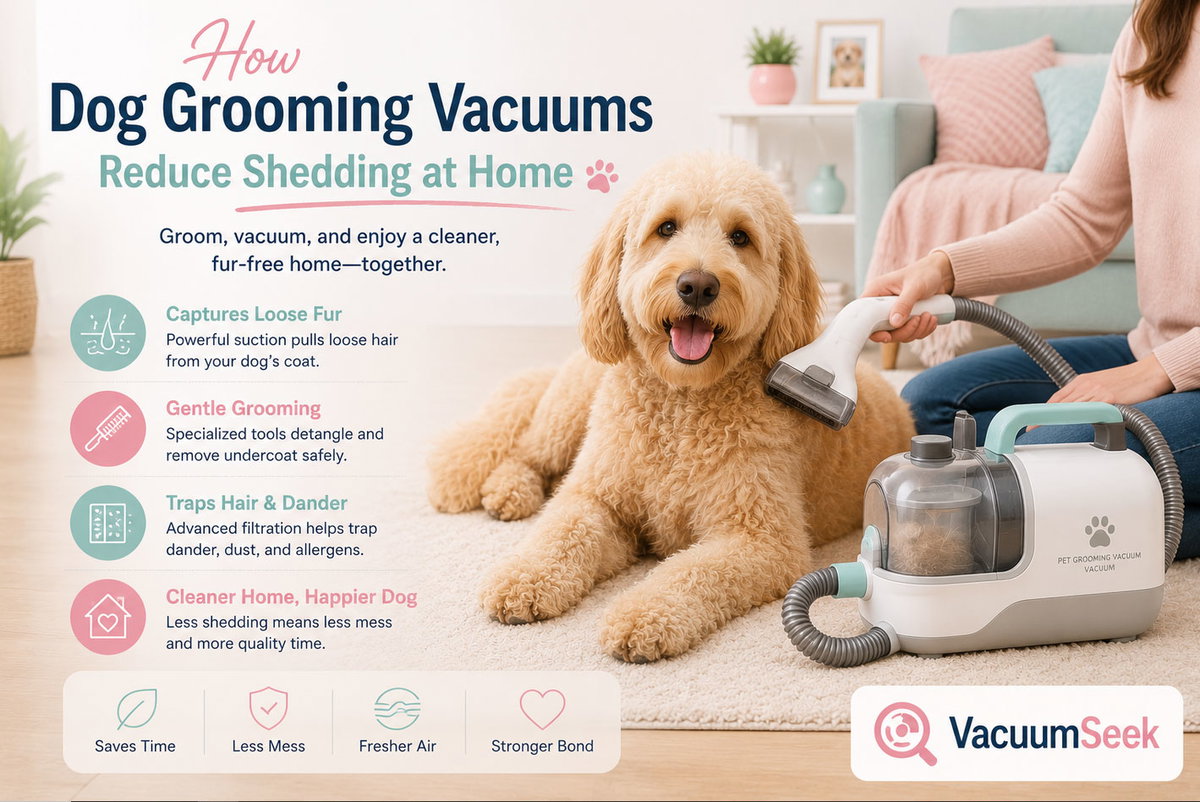
There's a particular kind of defeat that comes from vacuuming your living room on a Tuesday and finding a fresh drift of dog hair under the coffee table by Thursday. You didn't imagine it. You didn't do anything wrong. Your dog is simply doing what dogs do — replacing old fur with new fur, on a schedule that has nothing to do with your cleaning calendar. For decades, the only real defenses were a brush, a lint roller, and a grim sense of humor. Then dog grooming vacuums showed up and quietly rewrote the rules, turning a losing battle against loose fur into something closer to a manageable routine.
This piece digs into what these machines actually do, why they work on a biological level rather than just a cosmetic one, and how to build a real at-home grooming habit around one — without turning your dog into a nervous wreck or your living room into a science experiment.
Why Dogs Shed in the First Place
Before getting into the hardware, it helps to understand the problem it's solving. Shedding isn't a flaw in your dog's design — it's the design working exactly as intended.
The Hair Growth Cycle Nobody Warned You About
Every hair on a dog's body moves through a cycle: it grows (anagen phase), matures and stops growing (catagen phase), rests in place (telogen phase), and eventually releases (exogen phase) to make room for new growth underneath. That last stage is shedding. It's not an accident or a sign of poor health — it's a built-in maintenance system for getting rid of damaged or aging hair. According to the American Kennel Club, shedding is largely triggered by changes in daylight and temperature, which is why so many dogs seem to "blow their coat" in dramatic waves during spring and fall rather than shedding at a steady, boring pace all year.
The problem for pet owners isn't that dogs shed — it's that thousands of hairs can hit the exogen phase around the same time, especially in double-coated breeds. That's when a normal week turns into a hairy one.
Coat Type Matters More Than Breed Stereotypes
Not all shedding looks the same, and a grooming vacuum that works beautifully on a Labrador's short double coat won't necessarily do much for a Poodle's curly, low-shed coat, which sheds so little that regular haircuts matter more than deshedding tools. Broadly, dogs fall into a few coat categories:
- Double-coated breeds (Golden Retrievers, Huskies, German Shepherds) carry a soft undercoat beneath a coarser topcoat, and they shed the undercoat heavily during seasonal transitions.
- Single-coated short-haired breeds (Boxers, Beagles) shed steadily year-round in smaller amounts, but because the hairs are short and stiff, they work themselves deep into upholstery.
- Long-haired breeds (Afghan Hounds, Collies) shed less dramatically but the individual hairs are longer and more visible, so a little shedding looks like a lot.
- Low-shedding or curly-coated breeds (Poodles, Bichon Frises) mostly retain loose hair within their curls instead of dropping it, which is why they mat instead of shed onto the floor.
Knowing which category your dog falls into changes almost everything downstream — which attachments matter, how often you should run a session, and how much of a difference a grooming vacuum will realistically make.
The Old Way: Brushing, Vacuuming, Repeat
For most of pet-owning history, the deshedding routine has looked the same: brush the dog outside or over a towel, then vacuum the house separately, then repeat in a few days once the hair has redistributed itself across every soft surface in the home.
Why Traditional Grooming Falls Short
The core issue with brush-then-vacuum grooming isn't the brushing itself — a good slicker brush or undercoat rake genuinely pulls loose hair free. The issue is what happens in the gap between "brush releases the hair" and "hair lands somewhere." That gap is where fur becomes airborne, settles into carpet fibers, drifts onto furniture, and gets tracked into rooms the dog never even entered. You end up cleaning the same hair twice: once off the dog, and again off everything the dog's fur touched on the way down.
The Hidden Cost of Airborne Dander
Loose hair carries dander with it — flakes of dead skin that are a major trigger for pet allergies. Traditional brushing, especially indoors, tends to launch dander into the air rather than containing it. This is part of why a grooming session can leave allergy-prone household members sneezing for the rest of the day even after the visible hair has been swept up. The mess isn't just what you can see on the floor.
What Exactly Is a Dog Grooming Vacuum
A dog grooming vacuum is a combination device: a motorized suction unit paired with grooming attachments — usually a slicker brush, a deshedding rake, sometimes clipper attachments — so that hair is pulled loose and drawn directly into a collection canister in the same motion. Instead of grooming first and cleaning second, both steps happen simultaneously.
Anatomy of the Machine
Most models share a similar structure: a base unit housing the motor and a dust cup, a flexible hose, and interchangeable heads that snap on for different tasks. A guide summarizing the category notes that these kits combine grooming tools such as brushes, clippers, and deshedders with a built-in vacuum that collects loose hair, dander, and dust as the dog is groomed, which is the entire point of the design. Suction ratings vary widely, typically measured in pascals (Pa), and noise-dampening engineering has become a major selling point since dogs — especially skittish ones — tend to be more tolerant of a quiet hum than a roaring shop vac.
How It Differs from a Standard Deshedding Tool
A standalone deshedding tool, like a rake or a FURminator-style comb, still does the job of loosening dead undercoat. What it doesn't do is contain it. You pull the tool through the coat, hair collects on the teeth, and eventually you have to pull it off by hand and drop it in the trash — while whatever didn't stay on the teeth drifts onto the floor. A grooming vacuum removes that middle step entirely. The brush loosens the hair; the suction claims it before it ever touches the ground.
How Grooming Vacuums Actually Cut Down Shedding at Home
This is the part that matters most, because the value of these machines isn't really about the grooming session itself — it's about what happens in the days after.
Capturing Hair at the Source
The core mechanism is simple physics: hair that never leaves the immediate zone around the brush head never makes it to your carpet, couch, or clothes. Reviews of the category consistently point to capture rates around 99% of loose fur in a single session, which sounds almost too tidy, but the logic holds up — a brush alone can only pull hair loose; suction is what actually removes it from the environment rather than relocating it slightly.
Breaking the Shed-Spread-Resettle Cycle
Every hair that lands on the floor during a traditional grooming session doesn't just sit there politely. Foot traffic, HVAC airflow, and the dog's own movement redistribute it — under furniture, into air vents, onto clean laundry left out for five minutes. A grooming vacuum interrupts this cycle at the earliest possible point, before redistribution can even start. That's the real reason households report a noticeable drop in daily upkeep: it's not that less hair exists, it's that far less of it ever gets the chance to spread.
The Suction and Brush Combination Effect
There's also a compounding effect worth mentioning. Suction pulls the coat gently taut as the brush moves through it, which tends to lift the undercoat more thoroughly than brushing on a loose, relaxed coat. The brush isn't just gliding over the surface — it's working against a small amount of tension created by airflow, similar to how a hairstylist pulls hair taut before cutting to get a cleaner result. The net effect is more dead undercoat removed per pass, not just less mess from what's removed.
Choosing the Right Grooming Vacuum for Your Home
Not every model suits every dog, and picking the wrong one is a fast way to end up with an expensive gadget gathering dust in a closet.
Suction Power and Noise Levels
Suction is usually listed in pascals, and higher isn't automatically better if your dog is noise-sensitive. Many current models offer adjustable suction settings specifically so the power can be dialed down for nervous dogs or puppies being introduced to the tool for the first time, and manufacturers have leaned hard into noise-reduction engineering — some models advertise operating around 50 decibels, which is closer to a quiet conversation than a traditional vacuum.
Attachments Worth Having
A basic kit typically includes a slicker brush for surface hair, a deshedding rake or undercoat tool for the dense stuff underneath, and a crevice or cleaning nozzle. Some higher-end kits add clipper attachments so trimming and grooming happen under the same suction system, which keeps clipped fur from scattering the way it normally does with standalone clippers. If your dog has a long or curly coat prone to matting, prioritize a kit that includes a dematting comb rather than relying on the slicker brush to do double duty.
Coat-Specific Considerations
Double-coated dogs benefit most from a strong undercoat rake attachment and higher suction, since the goal is pulling loose fur from deep in the coat rather than skimming the surface. Short-haired breeds do fine with a gentler brush head and lower suction, since their shedding is steadier and less voluminous per session. Curly and low-shedding breeds get less mileage from suction-heavy sessions and more from the brush and comb attachments used for detangling, since their loose hair tends to stay trapped in the curl rather than falling free on its own.
Building a Realistic At-Home Grooming Routine
The machine only does its job if the routine around it actually happens. A grooming vacuum left in a closet reduces exactly zero shedding.
A Practical Step-by-Step Session
- Pick a calm moment. Right after a walk or play session, when your dog is a little tired, tends to go better than trying to groom a wired, restless dog.
- Let the vacuum run near your dog before touching them with it. A short adjustment period where the dog can hear and see the machine running nearby reduces startle reactions later.
- Start with the lowest suction setting and the softest brush attachment, working in the direction of hair growth.
- Move to the undercoat rake for double-coated dogs, focusing on high-shed zones — flanks, chest, and the base of the tail.
- Reward generously. Treats during and after the session build a positive association that makes the next one easier.
- Empty the dust cup immediately after, since a full canister reduces suction efficiency on the next use.
How Often Is Enough
Frequency depends heavily on coat type and season. During heavy seasonal shedding — typically spring and fall — two to three short sessions a week make a visible difference. Outside of those peak windows, once a week is usually enough to keep loose hair from accumulating into a problem. Short-haired, steady-shedding breeds often do better with brief, more frequent sessions rather than one long weekly one, since there's less buildup to work through at any given time.
Common Mistakes That Undercut Results
A few habits quietly sabotage even a good grooming vacuum:
- Skipping the adjustment period. Forcing the tool onto a dog who's never heard the motor is the single most common reason people give up after one try.
- Using high suction on a first session. It's overwhelming, and it teaches the dog to associate the machine with stress rather than routine.
- Grooming a dry, ungroomed mat. Suction and brushing work on loose hair, not tangled clumps — mats need to be worked out gently by hand or with a dematting comb first.
- Neglecting the dust cup. A vacuum that's still full from last week's session has noticeably less pulling power, which quietly undoes a lot of the benefit.
- Treating it as a bathing substitute. Deshedding removes loose hair; it doesn't clean the skin or coat the way a bath does. The two serve different purposes.
Grooming Vacuums and Allergy Relief
For households with pet allergies, the appeal goes beyond a tidier floor. Because loose hair often carries dander, and dander is one of the most common pet allergen triggers, containing hair at the source rather than letting it become airborne during brushing can meaningfully cut down on the amount of allergen circulating through a home. This isn't a cure for pet allergies, and it won't replace air filtration or medical management for someone with a serious sensitivity, but it does address one of the delivery mechanisms — loose hair drifting through the air and settling into fabric, where it lingers far longer than it would in a sealed collection canister.
Regular grooming in general supports this goal. As the ASPCA notes in its dog grooming guidance, consistent brushing keeps a dog's coat in good condition by removing loose hair and dirt before it becomes a bigger problem — a grooming vacuum simply makes that same principle more contained and more thorough.
Frequently Asked Questions
Do grooming vacuums actually reduce total shedding, or just contain the mess? Both, to some extent. The dog still sheds the same underlying amount of hair biologically, but regular vacuum-assisted sessions remove dead undercoat before it has the chance to fall out on its own around the house, so the visible, floor-level shedding drops substantially even though the dog's natural hair cycle hasn't changed.
Is a grooming vacuum safe for anxious or noise-sensitive dogs? Most current models are designed with this exact concern in mind, offering adjustable suction and noise-dampened motors. A slow introduction — letting the dog get used to the sound before the brush ever touches their coat — matters more than the specific model in most cases.
Can I use a grooming vacuum on a cat too? Many kits are marketed for both, though cats are generally more sound-sensitive than dogs, so a lower suction setting and a slower introduction are worth the extra patience.
How long does a typical session take? For most dogs, ten to fifteen minutes is enough to cover the whole body once the dog is comfortable with the process. Heavy seasonal shedders may need a bit longer during peak shedding weeks.
Will this replace professional grooming? Not entirely. A grooming vacuum handles routine deshedding and light maintenance well, but tasks like precision trimming, bathing, nail care, and mat removal on severely tangled coats are usually better left to a professional groomer, especially for breeds with complex coat requirements.
What should I look for if my dog has sensitive skin? Prioritize models with adjustable, lower suction settings and softer brush attachments, and avoid dragging any attachment repeatedly over the same spot. If irritation or redness appears, pause the session — that's worth a quick check with your veterinarian, since PetMD notes that grooming issues can sometimes point to underlying skin conditions rather than just coat maintenance needs.
Final Thoughts
A dog grooming vacuum won't stop your dog from shedding — nothing will, short of intervening in a biological process that's been running since long before dogs were house pets. What it does is change where that shed hair ends up. Instead of a slow-motion scatter across every surface in your home, the hair gets pulled directly into a canister the moment it lets go of the follicle. That's a small shift in mechanics with an outsized effect on daily life: less time spent chasing fur across the floor, fewer allergens circulating through the air, and — if you introduce the routine patiently — a grooming session your dog might actually come to enjoy rather than dread.
The tool matters less than the habit built around it. A grooming vacuum used once and forgotten changes nothing. One worked into a short, calm, twice-weekly routine during shedding season quietly becomes one of the more effective upgrades a dog owner can make to daily home life.
Further reading: